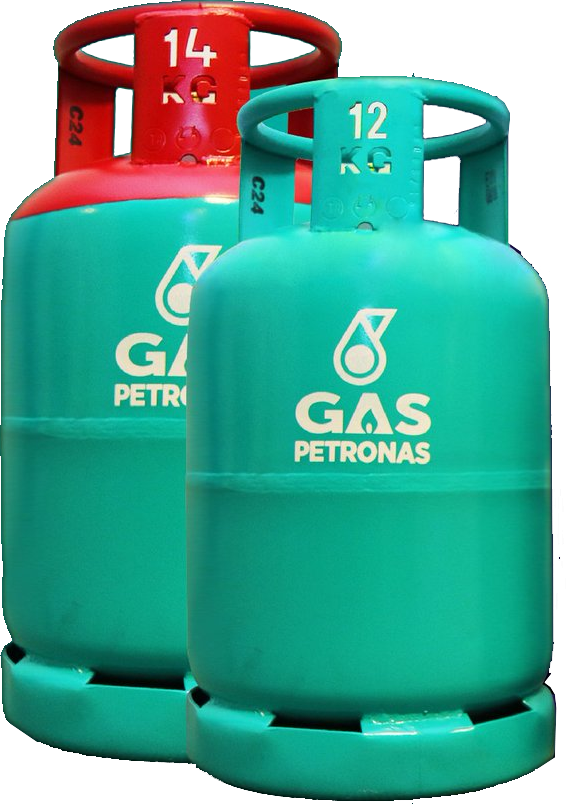
What is LPG?
Liquefied Petroleum Gas or LPG is made of hydrocarbon gases, mainly PROPANE (C3H8) and Butane (CAH10).
LPG appears in a gaseous formin its natural state and under ambient temperature and pressure, but for ease of storage and transportatfon, it undergoes a compression or refrieration process to liquefy it. Naturally existing as a colorless and odorless gas, an odorant is purposefully added for safety reason to enable easy detection in case of leakage.
LPG is used widely in homes for cooking and washing, and in industries for heating and cleaning, and as aerosol propellants and refrigerants. It is also becoming recognized as an excellent alternative for automotive fuel. Due to its intrinsic advantages, bulk LPG provides extremely safe multiple applications for industrial consumers thus allowing for flexibility and control. Bulk LPG is used extensively by small and medium scale industries that require 'clean burn' fuel for boilers, ovens and furnaces such as those used in the hospitality, food and dairy industries; and for direct firing applications in the glass and ceramic industries.
LGP Gas is superior to liquid fuels for environmental and economic reasons. Some comparisons are listed below:
- Clean burn: LPG is an efficient fuel that leaves no carbon deposits on the burner and inside of boilers due to its low combustion emissions.
- No staining/ no fumes: Unlike diesel, LPG does not stain floors nor create noxious fumes. Hence, it is widely used in the food industries especially dairy and confectionery, and in hotels.
- No pilferage: Bulk LPG is stored in a pressurized tank resembling a large canister. The gas is utilised through a dosed system; therefore, there is no scope for pilferage.
- Higher efficiency: LPG provides higher efficiency of combustion and heat transfer due to its intrinsic composition that allows almost complete combustion and leaves no residue.